
Research
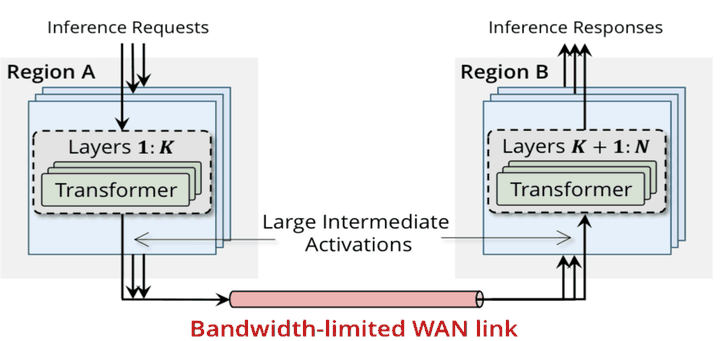
Communication-Efficient Cross-Region LLM Inference
Building communication-efficient systems for LLM inference across geographically distributed data centers, through hardware–software co-design.
- NSDI ’26 poster mrLLM: Fast Multi-Region LLM Inference Using Learned Adapters Poster
- NAIC @ SIGCOMM ’26 Towards Network-Efficient Cross-Regional Inference via Learned Activation Compression Paper
- Designing learned activation-compression techniques and adapter-based methods to reduce cross-region data movement while preserving model quality.
- Evaluating partitioning strategies for prefill, decode, and agentic inference workloads across latency, throughput, data movement, and model quality under heterogeneous compute and network constraints.
LLMs for Verifiable Specification Generation
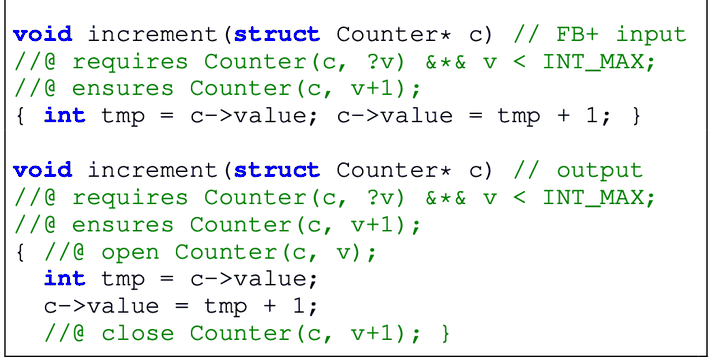
Can LLMs write formal specifications that a static verifier (VeriFast) actually accepts?
- FORGE ’25 Evaluating the Ability of GPT-4o to Generate Verifiable Specifications in VeriFast Paper
- ISSRE ’26 An Empirical Study of LLM-Generated Specifications for VeriFast Details
- Evaluated LLMs on generating separation logic specifications for VeriFast, from baseline prompting to chain-of-thought, prompt chaining, and few-shot prompting.
- Categorized the VeriFast benchmarks and built tailored input datasets for systematic evaluation.
- Designed a qualitative analysis framework for output correctness, syntactic validity, and model failure modes.
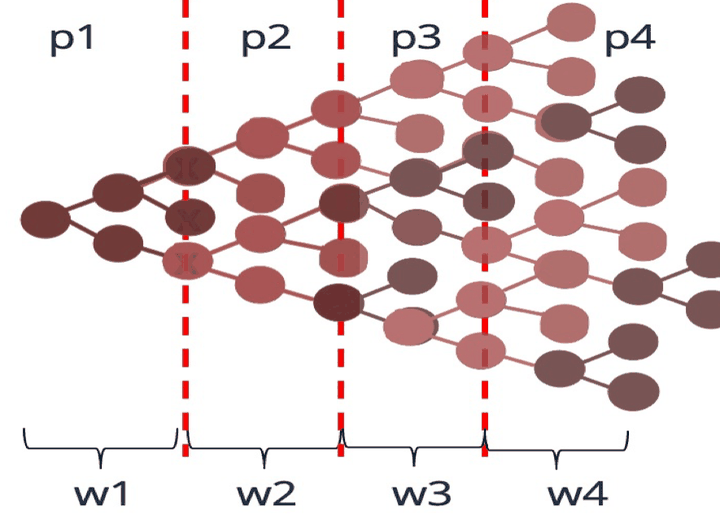
SpliDT: Partitioned Decision Trees for Line-Rate ML Inference
Detecting malicious network traffic with ML models that run at line rate on programmable switches.
- Implemented and benchmarked one-class SVMs, random forests, and isolation forests for payload-level anomaly detection, establishing baselines for accuracy, cost, and scalability.
- Analyzed how packet-, flow-, and connection-level payload features trade off prediction accuracy against computational overhead.
- Explored transformer-based models to automate payload feature selection, comparing them against traditional methods integrated with SNORT.
Deep Learning for Drug Discovery
A deep-learning pipeline that predicts 3D molecular structures and properties to study crystal growth.
- Implemented a Python deep-learning pipeline that predicts 3D molecular structures and properties from user-input parameters.
- Applied ML methods to model crystal growth mechanisms and improve prediction accuracy.